
PRODUCT CENTER
OUR ADVANTAGE

AAA Level
Credit Steel Supplier
10+
Stock Warehouses
Support
Three-party Inspection
Large Order
Preferential Policies
Order Now
+86 19153118618
Grade 316 stainless steel is an austenitic form of stainless steel with a molybdenum content of 2-3%. The addition of molybdenum makes the metal more resistant to pitting and corrosion and improves its resistance to exposure to high temperatures. This grade of stainless steel is particularly effective when used in acidic environments. With this metal, corrosion caused by acetic acid, hydrochloric acid and other forms of acid can be prevented.
301 grade stainless steel is a common austenitic stainless steel with good corrosion resistance and high carbon content, and can be cold worked to various temperatures. Among stainless steels, 301 is the most easily strengthened steel by cold deformation. Cold deformation processing can improve the strength and hardness of steel, and retain sufficient plasticity and toughness. In addition, this steel has good rust resistance under atmospheric conditions, but its corrosion resistance in reducing media is poor, and its corrosion resistance in chemical media such as acid, alkali and salt is poor. Therefore, it is not recommended for corrosive environments.
The mechanical properties of 405 stainless steels are important in determining their suitability for various applications. This steel has excellent workability and is easy to cut and shape into different shapes. In addition, the material exhibits a good level of strength and hardness, making it wear-resistant and tear-resistant. A remarkable characteristic of 405 stainless steel is its ductility, which refers to its ability to deform under pressure without breaking. This property makes the metal suitable for forming processes such as bending and rolling without cracking or breaking.
Grade 904L is an unstable low carbon high alloy austenitic stainless steel. The addition of copper to this grade greatly increases its resistance to strong reducing acids, especially sulfuric acid. It is also highly resistant to chloride attack, including pitting/crevice corrosion and stress corrosion cracking.
202 stainless steel is an austenitic chromium-nickel-manganese alloy. It has high ductility, good corrosion resistance and excellent toughness in both high and low temperature environments. 202 stainless steel is one of the most widely used 200 series stainless steel. 202 stainless steel, the austenitic structure is stabilized by the addition of nickel and manganese, thereby preventing the formation of harmful phases, such as sigma phase or chromium carbide. The high nickel content also improves the corrosion and oxidation resistance of the steel at high temperatures.
305 stainless steel is an austenitic chromium-nickel stainless steel with a low work hardening rate. This low work hardening rate makes it suitable for many deep drawing applications. In order to minimize the earrings during the drawing process, the directionality introduced during the cold rolling process must be kept to a minimum.
303 grade stainless steel is also called 1.4305 stainless steel, and 303 grade is the easiest to process of all austenitic stainless steels. The machinability properties of the 303 grade are due to the presence of sulfur in the steel elements. Sulfur can improve machining, but it also reduces corrosion resistance and toughness. The corrosion resistance of the 303 type is lower than that of the 304 type, but the toughness is still as excellent as other austenitic grades.
347 is a stable austenitic chromium steel, containing niobium, which can eliminate carbide precipitation, thereby eliminating corrosion during the year. 347 is stabilized by the addition of chromium and tantalum, and provides higher creep and stress rupture properties than alloys 304 and 304L, which can also be used for sensitization and exposure to corrosion problems during the year. The addition of niobium also makes the 347 alloy have excellent corrosion resistance, even better than the 321 alloy.
CONTACT US
Email:sales11@xtsteelgroup.com
Add:Block A, West Jin Times Central Square, Huaiyin District, Jinan City, Shandong Province
GET A FREE QUOTE
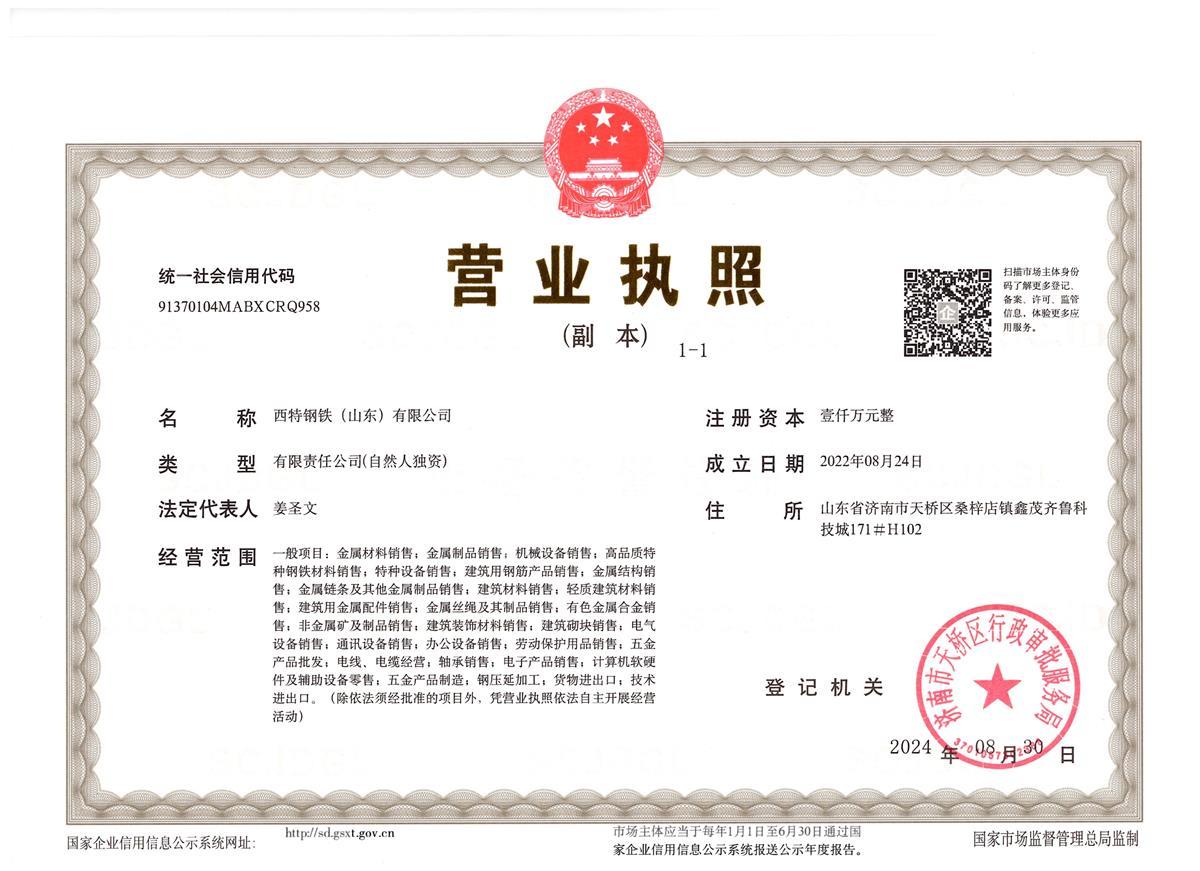
Copyright : Xite Steel (Shandong) Co., Ltd. Powerby : 300.cn jinan2 Seo Tags BUSINESS LICENSE