
PRODUCT CENTER
OUR ADVANTAGE

AAA Level
Credit Steel Supplier
10+
Stock Warehouses
Support
Three-party Inspection
Large Order
Preferential Policies
Order Now
+86 19153118618
Type 201 stainless steel is an austenitic chromium-nickel-manganese stainless steel, which is developed to save nickel. Type 201 is a low-cost alternative to traditional Cr-Ni stainless steels such as 301 and 304. The nickel is replaced by added manganese and nitrogen. It cannot be hardened by heat treatment, but can reach high tensile strength by cold working. Type 201 is essentially non-magnetic in the annealed condition and becomes magnetic upon cold working. In many applications, the 201 type may replace the 301 type.
2507 Duplex Stainless Steel Plate
2507(UNS S32750) is an ultra-duplex stainless steel containing 25% chromium, 4% molybdenum and 7% nickel. It is designed for demanding applications that require excellent strength and corrosion resistance, such as chemical processes, petrochemicals and seawater equipment. The steel has excellent resistance to chloride stress corrosion cracking, high thermal conductivity and low coefficient of thermal expansion. High chromium, molybdenum and nickel levels provide excellent resistance to pitting, crevice corrosion and general corrosion.
416 is a martensitic free-working chromium steel alloy, which is generally considered a first free-working stainless steel. It has the highest machinability of any stainless steel, about 85% of free-machining carbon steel. Martensitic stainless steels are designed to harden by heat treatment and have corrosion resistance. Although the corrosion resistance of 416 alloy and other martensitic stainless steels is not as good as that of austenitic or ferritic stainless steels, it still exhibits good corrosion and oxidation resistance and high strength in hardened and tempered conditions.
2205 Duplex Stainless Steel Plate
Duplex 2205 is a two-phase, ferritic, austenitic, 22% chromium, 3% molybdenum, 5% to 6% nickel alloy stainless steel. It is the most widely used duplex stainless steel grade and is characterized by high yield strength, which is twice that of standard austenitic stainless steel grades. It also exhibits good fatigue strength and excellent resistance to stress corrosion, cracking, pitting, erosion and general corrosion in harsh environments.
316Ti(UNS S31635) is a titanium stabilized version of 316 molybdenum-containing austenitic stainless steel. 316 alloys are more resistant to general corrosion and pitting/crevice corrosion than traditional chromium-nickel austenitic stainless steels such as 304.
301 grade stainless steel is a common austenitic stainless steel with good corrosion resistance and high carbon content, and can be cold worked to various temperatures. Among stainless steels, 301 is the most easily strengthened steel by cold deformation. Cold deformation processing can improve the strength and hardness of steel, and retain sufficient plasticity and toughness. In addition, this steel has good rust resistance under atmospheric conditions, but its corrosion resistance in reducing media is poor, and its corrosion resistance in chemical media such as acid, alkali and salt is poor. Therefore, it is not recommended for corrosive environments.
302 stainless steel is a variant of 18% chromium and 8% nickel austenitic stainless steel. This alloy is the most common and frequently used alloy in the stainless steel family. 302 are slightly higher carbon versions of the 304, usually in the form of ribbons and wires. It is a tough, tough grade, has considerable corrosion resistance, is non-magnetic, and cannot be hardened by heat treatment. 302 are typically used in their annealed state and have a high degree of ease of manufacture and formability.
309/309S Stainless Steel Plate
309 and 309S are austenitic chromium-nickel stainless steels that are typically used for higher temperature applications. Due to its high chromium and nickel content, 309 and 309S alloys have a high degree of corrosion resistance, excellent oxidation resistance and excellent heat resistance, while providing good strength at room temperature and high temperature. The only significant difference between 309 and 309S is the carbon content. The 309S alloy has less carbon, which minimizes carbide precipitation and improves weldability.
CONTACT US
Email:sales11@xtsteelgroup.com
Add:Block A, West Jin Times Central Square, Huaiyin District, Jinan City, Shandong Province
GET A FREE QUOTE
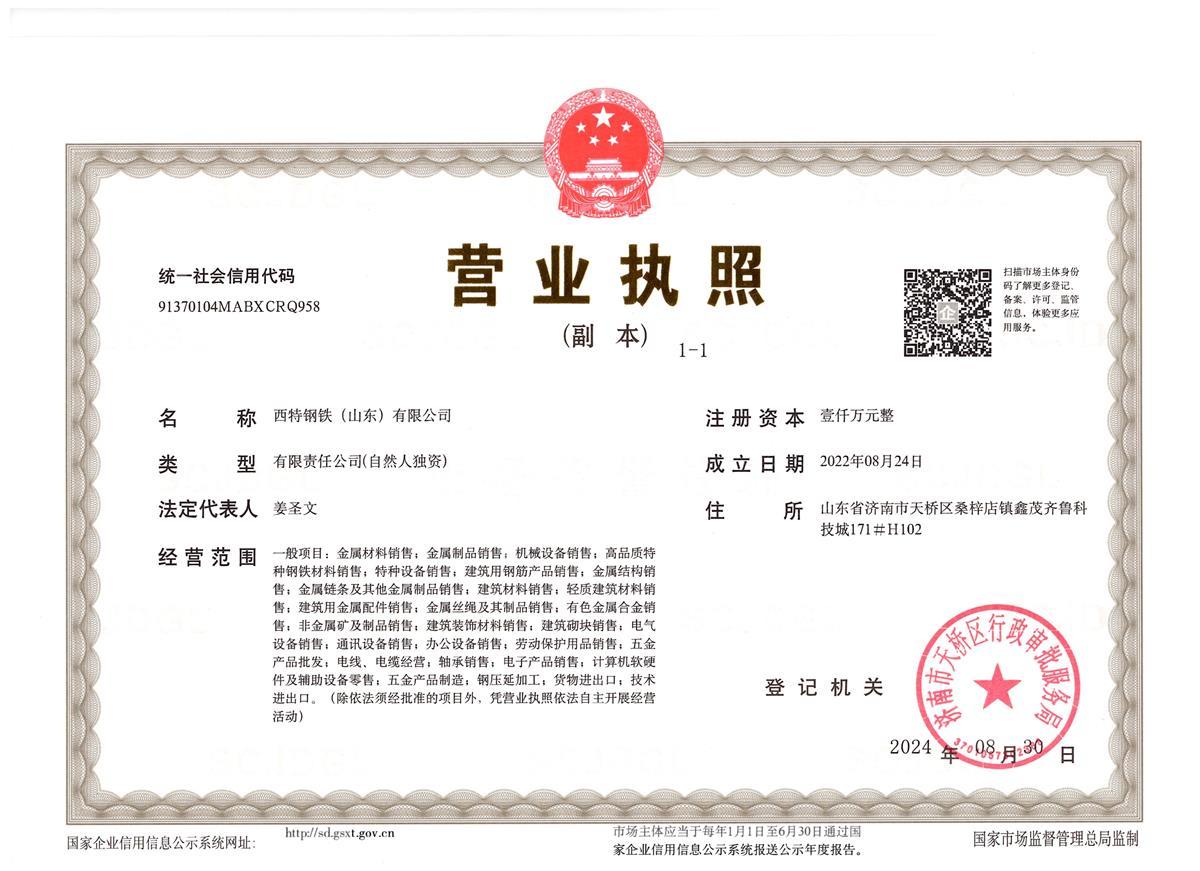
Copyright : Xite Steel (Shandong) Co., Ltd. Powerby : 300.cn jinan2 Seo Tags BUSINESS LICENSE